
Why talking to your plants isn't strange…it’s self-care
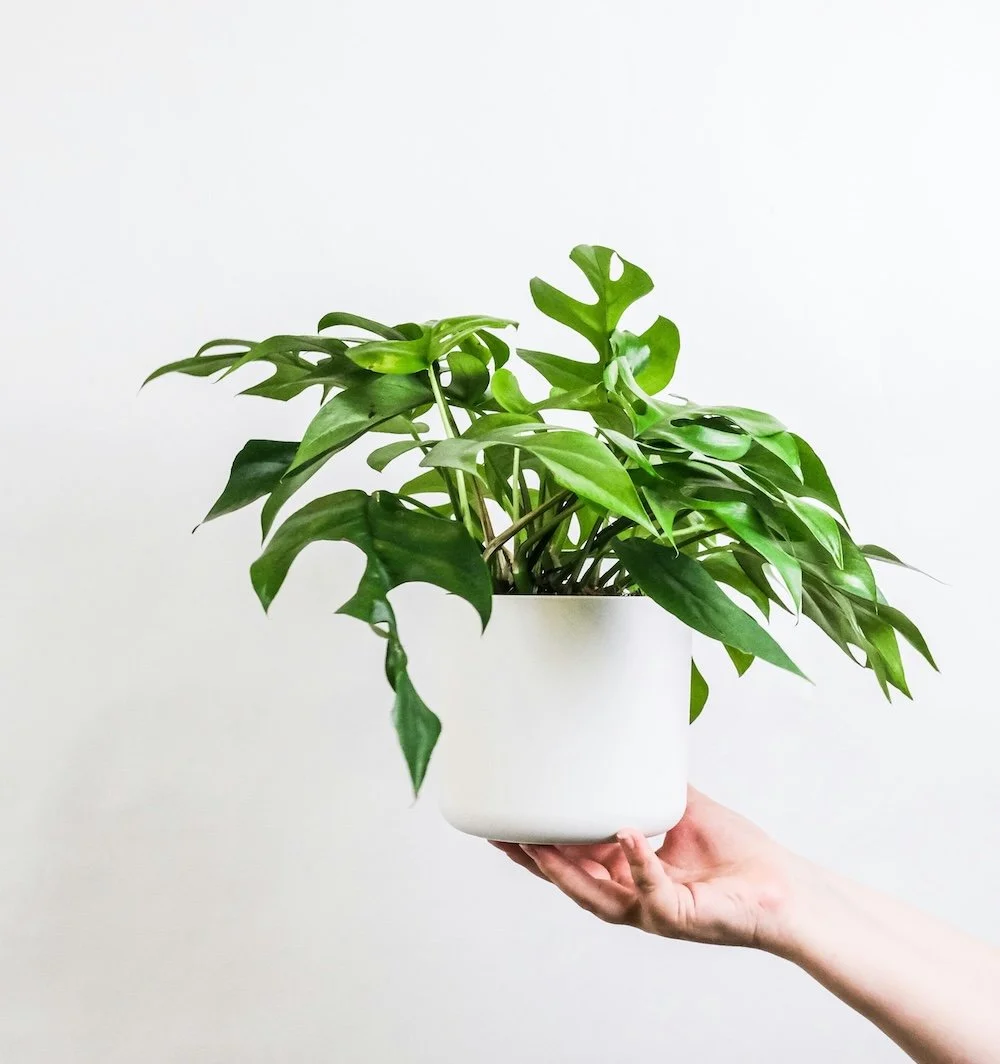
If you’ve ever felt a sense of pride when a new leaf on your indoor plant unfurls, or felt the guilt when forgetting to water it, there's some interesting research that supports what many houseplant owners have always known.
Indoor plants contribute to wellbeing, but how we relate to them might also say something about how we care for ourselves - and connect with others.
What the research tells us
Researchers in Australia asked 115 indoor plant owners about the benefits of caring for their plants and - more interestingly - to describe their relationship with them (Busque et al., 2024). The houseplant owners had an average of 15 plants each - from a single succulent to over 500 plants (I know!).
These plant owners identified eleven different ways their plants enhanced their lives.
The top three were fairly predictable: decorative and aesthetic value; improvement of air quality; calming effects. All of these have been documented in other research (Zhao et al., 2023; Deng & Deng, 2018).
But the fourth most common benefit mentioned was giving a sense of fulfilment and purpose.
Four types of plant relationships
Taking this further, the researchers then identified four ways in which people relate to their indoor plants:
Highly connected relationship (14% of people) - These are the plant parents who treat their greenery as family members. One 28-year-old participant said, "They are like my children." Another, a 21-year-old, admitted to crying when a leaf broke off. It's a genuine expression of care.
Engaged relationship (42% of people) - This was the largest group. These people feel emotionally connected to their plants and take time to care for them. They feel satisfaction when watering, nervousness when they wither, and pride in keeping them alive.
Limited engagement relationship (23% of people) - These are the people who enjoy having plants around but don’t have any deep emotional attachment. They do the minimum - just feeling pleased when plants survive!
No relationship (12% of people) - Some people have plants without feeling any connection - perhaps they were gifts, or they see them as objects rather than living things.
We all have different relationships with our plants - and who knew there would be research about this!
What plants teach us about nurturing
As a therapist, I see a parallel between how we care for plants and how we care for ourselves.
Plants need consistent attention – and the right conditions. Because they’re indoors, they need us to notice when something's off and when to take action. The same applies to our own wellbeing and our relationships. We thrive with consistent, gentle attention. We need stimulation but also rest. Connection but also time alone.
When someone says they feel proud when their plant grows, or anxious when the leaves turn brown, they’re noting the change and deciding how to respond. They're responding rather than reacting, finding satisfaction in the process of nurturing, not just the outcome.
Connection to something larger
The study mentions the Biophilia Hypothesis - the idea that humans have an innate tendency to seek connections with nature and other life (Wilson & Kellert, 1993).
We evolved within the natural world, and that connection still matters even when we're not living in it. Bringing plants indoors is one way we maintain that connection. And for those who develop deeper relationships with their plants - talking to them, worrying about them - they're recognising something fundamental about being human. It's about our capacity to care for living things beyond ourselves,
And next time…
So, next time you are watering your plants, think about what you notice about yourself in relation to the plant.
References
Deng, L., & Deng, Q. (2018). The basic roles of indoor plants in human health and comfort. Environmental Science and Pollution Research, 25(36), 36087–36101.
Han, K.-T., & Ruan, L.-W. (2019). Effects of indoor plants on self-reported perceptions: A systemic review. Sustainability, 11(16), 4506.
Le Busque, B., Litchfield, C., & Shaw, C. L. (2024). Exploring the indoor plant–people relationship through qualitative responses. Plant-Environment Interactions, 5(6), e70025.
Pérez-Urrestarazu, L., Kaltsidi, M. P., Nektarios, P. A., et al. (2021). Particularities of having plants at home during the confinement due to the COVID-19 pandemic. Urban Forestry & Urban Greening, 59, 126919.
Wilson, E. O., & Kellert, S. R. (1993). The Biophilia Hypothesis. Washington, DC: Island Press.
Zhao, T., Markevych, I., Buczyłowska, D., Romanos, M., & Heinrich, J. (2023). When green enters a room: A scoping review of epidemiological studies on indoor plants and mental health. Environmental Research, 216, 114715.