
Pet grief is real grief
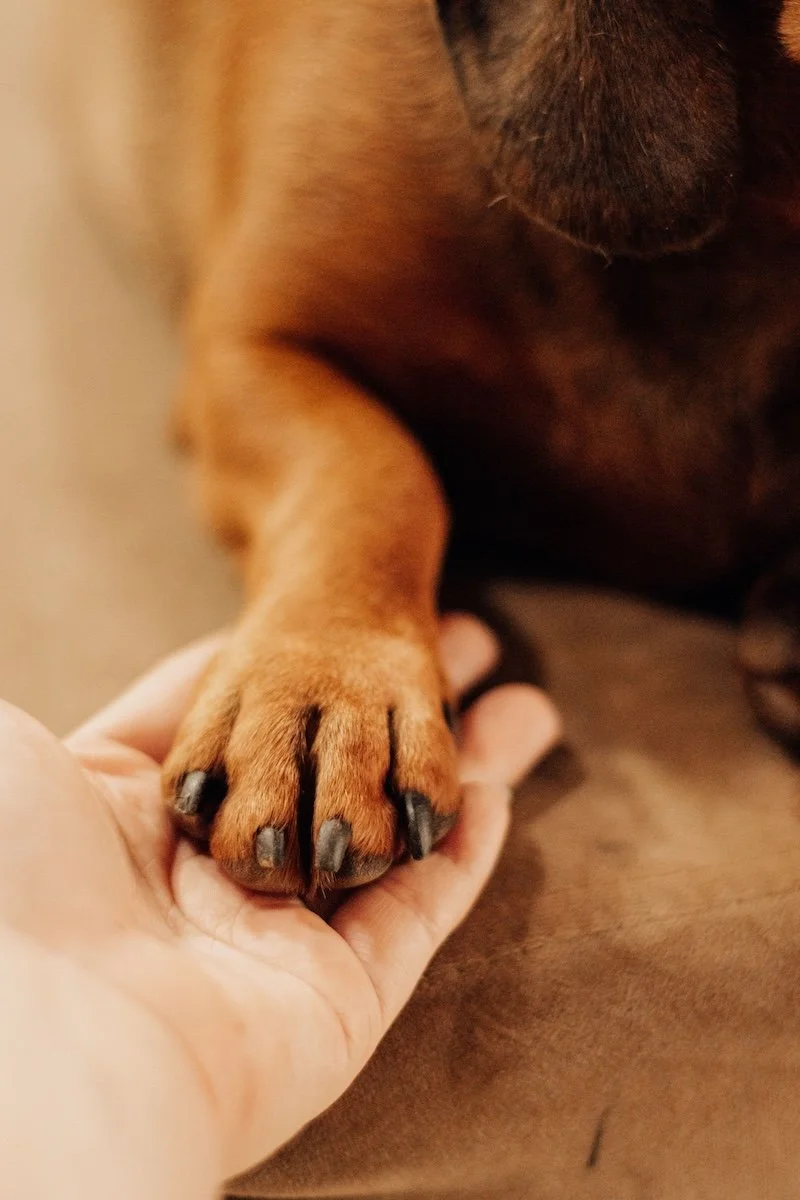
I’m a volunteer for a bereavement helpline. Each week, I take calls from people at different points in their grief journey - whether this is wanting an answer to a practical question, to share stories about their loved one or needing someone to be there in their darkest and saddest times.
The overwhelming grief and desperate loss are palpable.
And that same sense of grief can be there for some too when a dear pet has been lost. In my own private practice, I have had clients sit across from me and apologise for booking a session. ‘Silly’ is a word often used about pet grief, after all, it's ‘just’ a dog or a cat they grew up with or shared a life with.
But it isn’t silly. It is grief, doing exactly what grief does.
Why we minimise pet bereavement
Pet loss doesn't come with the same social scaffolding as human loss. There’s no sympathy card, or allowance made by employers. Friends who would know what to say about the loss of a parent, respond in a way more akin to replacing an object rather than to losing a relationship.
That gap between how big the loss feels and how small everyone else treats it has a name: disenfranchised grief. It's grief that isn't publicly acknowledged or socially supported, and it tends to get more complicated, not less, because on top of the loss itself, you're also managing the sense that you're not allowed to be this upset.
Why it hits as hard as it does
For many people, a pet isn't a lesser relationship; it can be the most consistent presence across the day. He might be the one who greets you the same way whether you’ve had a brilliant day or a terrible one. Or she’s the one who sleeps against your legs through a divorce, a redundancy, a diagnosis, or times that nobody else sees up close. Many talk to their pets in a way they don't talk to anyone else, telling them the version of the truth they haven't yet said out loud to another person.
So, when they’re no longer around, you’re losing a routine, a source of unconditional presence and a witness to years of your life that no one else was there for in quite the same way. And nothing in you ranks that loss as smaller just because the one you lost had four legs.
What pet grief can look like
Pet grief shows up the way any grief does - and just as unpredictably.
Some people cry for weeks. Others feel strangely numb and then get ambushed by a wave of it months later, tripped up by finding a toy or food bowl in a cupboard. Guilt is common too, especially around the decision to let them go. There are plenty of ‘what ifs’ and ‘if onlys’.
People often talk about the stages of grief as though it’s something to move through and complete. But grief doesn’t always work that way - grief can be something we live alongside, with life growing around it rather than the loss shrinking away.
What can help with pet bereavement
The same principle applies to losing your pet as with any loss: the feelings need somewhere to go. Swallowing it because you think you should be over it by now, or because you're embarrassed to still be upset, just delays the processing rather than avoiding it. The body keeps the account open either way.
What tends to help is permission. Permission to keep a collar or a bed out for as long as you need to. Permission to cry at the vet's when you go in for something unrelated and see a photo on the wall that looks like your own. Permission to tell people the truth about how hard this is, even to the ones who won't quite understand it.
Hypnotherapy isn’t about talking yourself out of grief or fast-forwarding through it. Instead, it gives your nervous system the space and the tools to process a loss it's been holding onto, often quietly, often for longer than you realise, so the weight of it doesn't sit in your body indefinitely.
If this is you
If you've lost a pet and you're still carrying more than you think you're ‘supposed’ to, you're not being dramatic and you're not stuck. You loved something, and it mattered, and now it's gone. That's grief.
If you’d like support working through it, I'd be glad to help. Shall we book a Consultation Call and see if I might support you?.
And, if you are wondering what a first session with me might be like, my article explored this.
Common Questions About Pet Bereavement
Is it normal to grieve a pet as much as a person?
Yes. Attachment doesn't measure loss by species. A pet can be a daily source of routine, comfort, and companionship for years, so losing one triggers the same grief response as losing any close relationship.
How long does pet grief usually last?
There is no fixed timeline. Some people move through the sharpest pain in weeks; others feel numb at first and are hit by grief months later, often triggered by something small like finding a lead or a food bowl. Both are normal and typical.
Can hypnotherapy help with pet loss?
Yes. Hypnotherapy doesn't erase grief or rush you through it. It works with the nervous system to help process a loss that's often been held onto quietly, so it stops sitting heavily in the body.