
Driving anxiety: why it happens, and why it isn't permanent
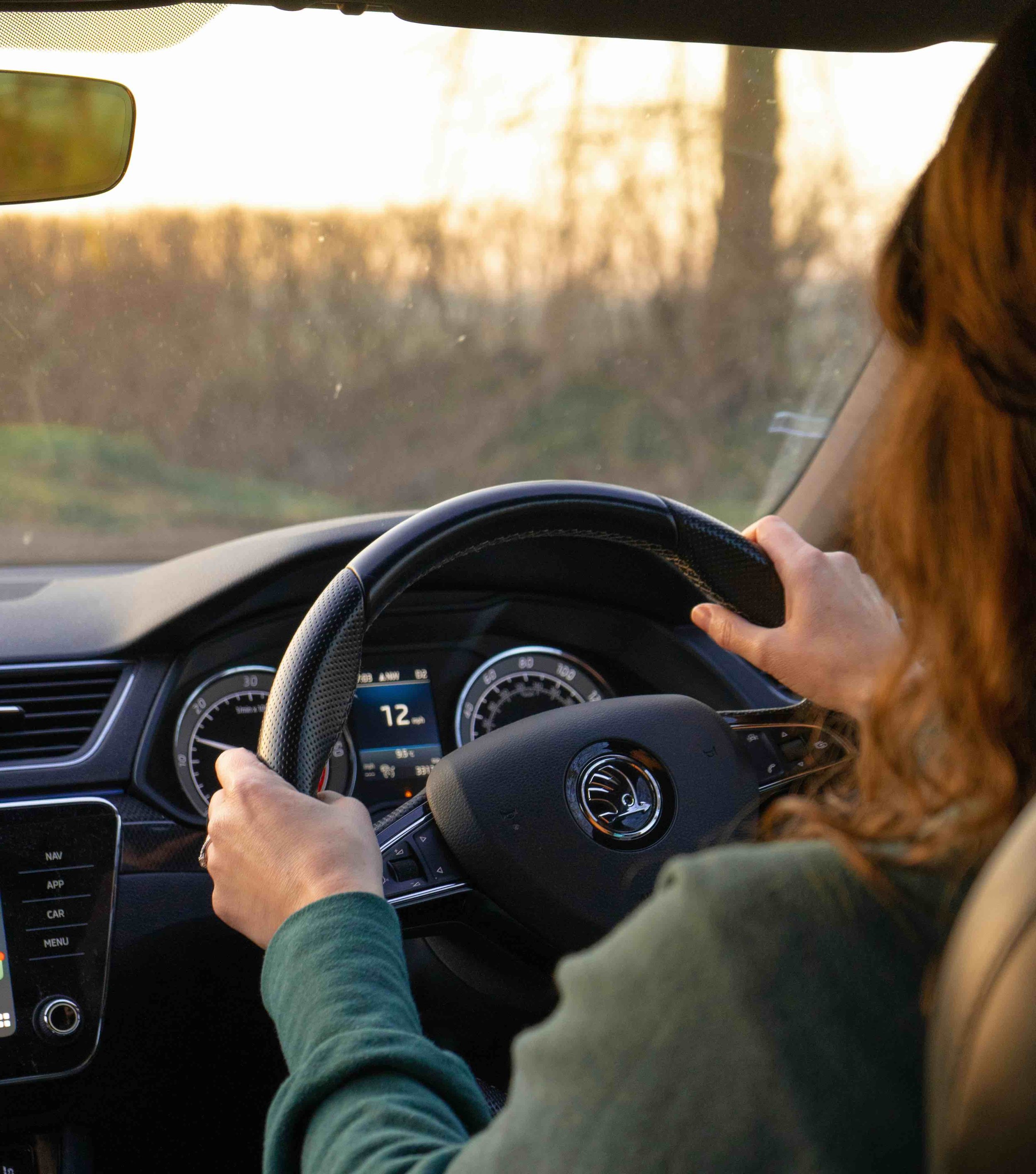
You used to drive without thinking about it.
Then something shifted.
Perhaps it was a near-miss or a realisation of the speed of the car, or of other drivers. Maybe a panicky feeling that came from nowhere on a motorway you'd driven a hundred times before. You might not even be able to point to a single moment.
But you do know that driving, which used to be automatic, is now avoided or is something you fear.
Driving anxiety is one of the most common things people bring to therapy, and it makes a lot more sense once you understand what's actually happening in your body when it shows up.
There is no single cause of driving anxiety
One of the things I hear most from clients with driving anxiety is a version of: "But nothing actually happened to me…."
They feel like their anxiety doesn't add up, as though there should have been a crash or a near-miss to justify how they feel now. There doesn't need to be.
Broadly, driving anxiety tends to come from one of two places.
The first is what you'd expect: a difficult experience behind the wheel, as a driver or a passenger, or witnessing someone else's accident. Your brain is very good at filing away threat, and the next time it's presented with a similar situation - the same road, the same weather, even just the sound of a car - it wants to warn you.
The second is less obvious, and far more common.
It's anxiety that seems to arrive out of nowhere. You're on a road, nothing is wrong, and suddenly your heart is racing, you feel sick, the world looks slightly unreal, you feel overwhelmed.
It isn’t really about you driving; it’s simply where the anxiety shows up.
The overflowing stress jug
There's a useful image for this second kind: think of a stress jug.
Every day, small amounts of stress and worry get poured in - a difficult conversation, a sleepless night, a missed deadline, money worries, a long to-do list, something unresolved from years ago that's never quite been dealt with. Most of the time we manage it fine. If the jug is already nearly full, it doesn't take much for it to overflow.
If you’re driving and a stray thought about work pops into your head, someone drives too close, or you miss a junction, your nervous system, which has been quietly absorbing pressure for weeks, suddenly acts as though the car and your driving are the danger.
It might be worth thinking about that.
It changes the question, from “why am I like this in the car?” to “what's been building, and why did driving happen to be where it caught up with me?”
Your amygdala isn't malfunctioning - it's doing its job, just badly aimed
Underneath both patterns is the same mechanism: your amygdala, the part of the brain that scans for threat. It doesn't reason. It doesn't check whether the danger is real. It just notices that you're under threat-level stress, and it fires.
You’re filled with adrenaline, and your heart races. You get tunnel vision, along with that horrible feeling of losing control.
The first time it happens, you do something to make it stop. You pull into the slow lane. You take the next junction off. You grip the wheel and get your passenger to talk you through it. In the moment, that feels sensible - you got through it, after all.
But your amygdala doesn't experience it that way. It notices that you did something different, and it concludes the danger must have been real, and that whatever you did is what saved you. So next time, it fires sooner and harder, and it expects you to do the same thing again. Driving anxiety like this usually builds from repeated small retreats, each one reasonable at the time, not from a single bad experience.
This is also why driving anxiety so often starts to resemble some aspects of agoraphobia, even in people who've never thought of themselves as having that kind of anxiety. First it's the fast lane you avoid. Then the motorway altogether. Then certain roads, certain times of day, certain distances from home. The world quietly gets smaller, one sensible-sounding decision at a time.
Why “just relax” doesn’t touch it
If driving anxiety were simply about stress, then stress management would fix it. But the issue isn’t your general stress level, rather it’s a learned association between the car and danger, and a fear of the anxiety itself.
That second part is worth dwelling on, as it's often the thing that keeps the anxiety going. After a while, it's less about the road and more about not wanting to feel that panic again.
You start scanning your own body for warning signs, checking your heart rate, wondering how you are. And checking in on yourself means you notice every change in your body – and noticing it confirms to your nervous system that the danger must be real.
Overcoming this type of anxiety doesn’t mean removing the trigger by no longer driving. It means helping your nervous system learn that it doesn't need you to check in on it.
How change actually happens
The route out of driving anxiety is not dramatic. Don’t force yourself to be on the motorway to "get it over with," and don’t sit and wait until you’re calm enough to try. Rather, face manageable amounts of the fear – perhaps sitting in a parked car with the engine off, driving first on familiar roads, staying on a dual carriageway for an extra junction, increasing your safe speed, or heading out at a different time - and letting your body discover it can tolerate the feeling.
Each time you do it without retreating, your amygdala gets new information: this wasn't dangerous, and I didn't need saving. Over time, and it does take time, that rewiring holds.
It also helps to understand why the anxiety showed up when it did - what was in the stress jug, what association got formed, what's been keeping it topped up since - and that history is often where hypnotherapy can help.
Working with your nervous system directly, in a state where it's more open to updating old associations, can speed up the process of teaching your brain that the road isn't the threat it once decided it was.
You get to arrive somewhere different
Whatever brought your driving anxiety on - a single frightening moment, or months of pressure that finally spilled over behind the wheel - the way through tends to look similar: understanding what's happening, and giving your nervous system enough safe repetition to learn something new.
It won't feel like progress every time. There will be days the amygdala still fires, and that's not failure, that's the process working.
But bit by bit, the roads come back.
A next step?
If overthinking is something you recognise in yourself and you'd like some support to reduce this tendency, I'd be glad to talk it through. Shall we schedule a free and no-obligation Consultation Call to see if I might support you?
And, if you’re wondering what a first hypnotherapy session involves, here’s a walkthrough of what to expect.
Common Questions About Driving Anxiety
Does driving anxiety go away on its own, or does it get worse if you avoid driving?
It tends to get worse with avoidance, not better. Each time you pull back from a road, a motorway, or a certain time of day, your brain reads that retreat as proof the danger was real, which makes it fire sooner and harder next time. The way through is small, manageable exposure that lets your nervous system learn it doesn't need to keep protecting you from something that was never actually dangerous.
Why do I suddenly feel anxious while driving, even though nothing has gone wrong?
Because driving anxiety doesn't always come from a bad experience behind the wheel. Often it's stress from elsewhere in your life, building up like a jug filling drop by drop, and the car is simply where it finally overflows. Your amygdala reads that build-up as danger and fires, even though the road itself isn't the problem.
Can driving anxiety start with no clear cause?
Very often, yes. Many people develop it without ever having a crash or near-miss — it can build up from general stress and show up behind the wheel simply because that's where your mind has time to wander.