
Standing at the threshold: why I call my practice Limen Therapy
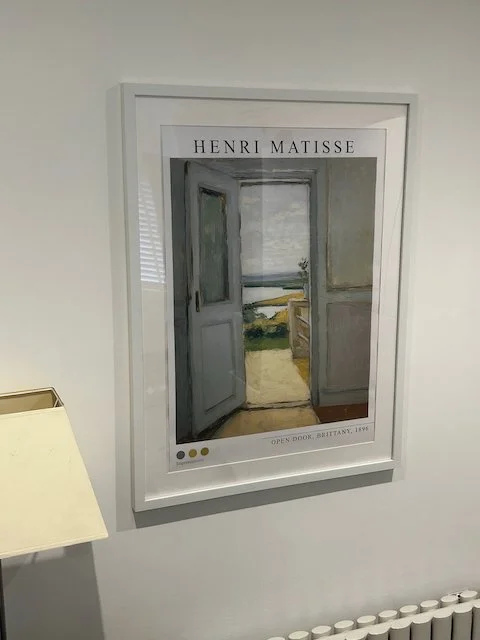
There's a Latin word that has quietly shaped how I think about therapy, about change, and about the work we might do together.
The word is limen. It means threshold.
A threshold - that strip of wood or stone beneath a doorway is the place you stand when you're neither fully in one room nor the other. You're in-between. At the edge of what was, and not yet quite stepped into.
And this, I've come to realise, is where many of us find ourselves when we seek therapy for life transitions.
Standing at a threshold.
In transition.
It’s that space that psychologist Dr. Vincent Deary describes as "no longer/not yet" - where the old narrative of who we are doesn't quite fit with us anymore, but the new story hasn't yet emerged (Deary, cited in BPS, 2017).
This is why I've named my practice Limen Therapy. Because I believe these threshold times - these moments at the limen - are precisely when having a therapist alongside you can make all the difference.
The nature of threshold times
Life is full of thresholds, though we don't always recognise them as such.
Kids moving out. Moving home. Starting a family. Blending families. Career change. Redundancy. Retirement. Midlife challenges. Illness. Recovering from illness. The grief of losing someone you love and the bereavement that changes everything.
These major life transitions aren’t simply times to get through quickly. They're crucial spaces of transformation where old patterns can be shed, and new possibilities can emerge.
There are times when, as Deary notes, transitions challenge our sense of who we are - and yet, at the same time, provide conditions for transformation and growth.
But here's what makes threshold times so challenging: we are literally between stories. Sitting in the ‘betwixt and between’. The gaping space between the narrative you've been living - about who you are, what matters, where you're heading - and the new story that hasn’t yet unfolded.
You're in the doorway. Standing on the limen. And it can feel really uncomfortable. And there are other examples of this limen space. Think of the shoreline - a changing landscape, hard to define and determine where the land ends and the sea begins as they blend into one, with the sand beneath us shifting.
When thresholds feel sticky: recognising when you’re stuck
Passing across a threshold in our lives is rarely neat or linear. And we might sit there for a while - or move forward and then back again. It can be unclear - and unsettling. We might feel stuck or we might feel adrift.
The uncertainty can bring its own anxiety and confusion - and self-doubt. There might be a desire to rush and to find out what comes next so we can feel clear and certain again. It feels harder too when everyone around you seems to have all the answers or when you're “supposed” to know what you want.
You can get stuck on a threshold. Or at least feel as though you're making no progress. The in-between can feel sticky, like you're treading water, not moving as you think you should be.
But what if the threshold itself is where the important work happens?
The opportunities of the in-between
Perhaps the crossing of a threshold isn’t something to move through as quickly as possible, but is a space or time with its own purpose.
It may be uncomfortable and uncertain, but it may offer up possibilities.
When you're standing at a threshold, you can look back at what was and see what’s gone before - the patterns, the beliefs, the ways of being that brought you here. You can look at what served you and what didn't - and acknowledge what needs to be acknowledged and let go of what needs to go. And you can look forward with curiosity.
Times of life transition allow you to consider your future self. They invite reflection, questioning, and exploration. Instead of rushing to resolve the uncertainty, you can learn to sit with it, explore it, and allow it to inform who you're becoming. Midlife is a great example of such a transition - and therapy can help in this.
How therapy supports you
This is why therapy - and particularly hypnotherapy - can be so valuable. Not to rush you through, not to provide easy answers or tell you what to do, but to be with you in the ‘in-between’. Here's how it can help:
Consistent presence
When everything feels uncertain, I provide stability. A regular time, a confidential space, a relationship that holds steady even if you are feeling a little shaky. This is not about having the answers - it's about me creating a container where any uncertainty, confusion, fears and possibilities can be explored safely.
Being there to witness your process
I can help you to recognise the past, stay with the present and explore the uncertainty of what lies ahead. Sometimes you simply need someone alongside you who can see movement when you can't.
Co-creating possibilities
At these pivotal life moments, there are often questions about the “what ifs?” We can explore these together - particularly through hypnosis. This is about you discovering ways of thinking about your future.
Tools for looking back - and forward
Depending on what you need, I can guide you in exploring what's happened in the past and understanding the root of feelings or beliefs you carry now. It might help to unstick the past and resolve, accept, or appreciate why things are as they are. And we can also use hypnosis to imagine what might come next.
Holding confidentiality
A range of emotions and feelings can crop up during times of change. Perhaps grief about what or who you have lost, guilt about choices made or wanting to make, fear, shame, or confusion. There are many more. These aren't necessarily feelings you want to share with friends or family. In therapy, you can express what you might hesitate to say somewhere else. The confidentiality within therapy (except in very specific circumstances we discuss at the start) creates freedom to be honest.
You're standing at the threshold
If you're in a time of transition right now, if you're standing in that doorway feeling neither here nor there, just know that you're not stuck or failing or lost.
You're at a threshold. You're standing on the limen. Betwixt and between. And these in-between times, uncomfortable as they are, are often where the most significant transformation occurs.
The old narrative no longer fits. The new one will emerge, but it needs time, space, and patience to form. You don't need to rush it. You don't need to have it all figured out.
And you don't have to stand at the threshold alone. If you would like to explore this with me, then let me know and we have have an initial call to talk it through. Reaching out is a big step - and if you’d like to understand a little more about what to expect in a hypnotherapy session with me, then read my article.
References
Deary, V. (2017). Cited in 'Liminality and the stuff of life.' The Psychologist. British Psychological Society. Available at: https://www.bps.org.uk/psychologist/liminality-and-stuff-life